
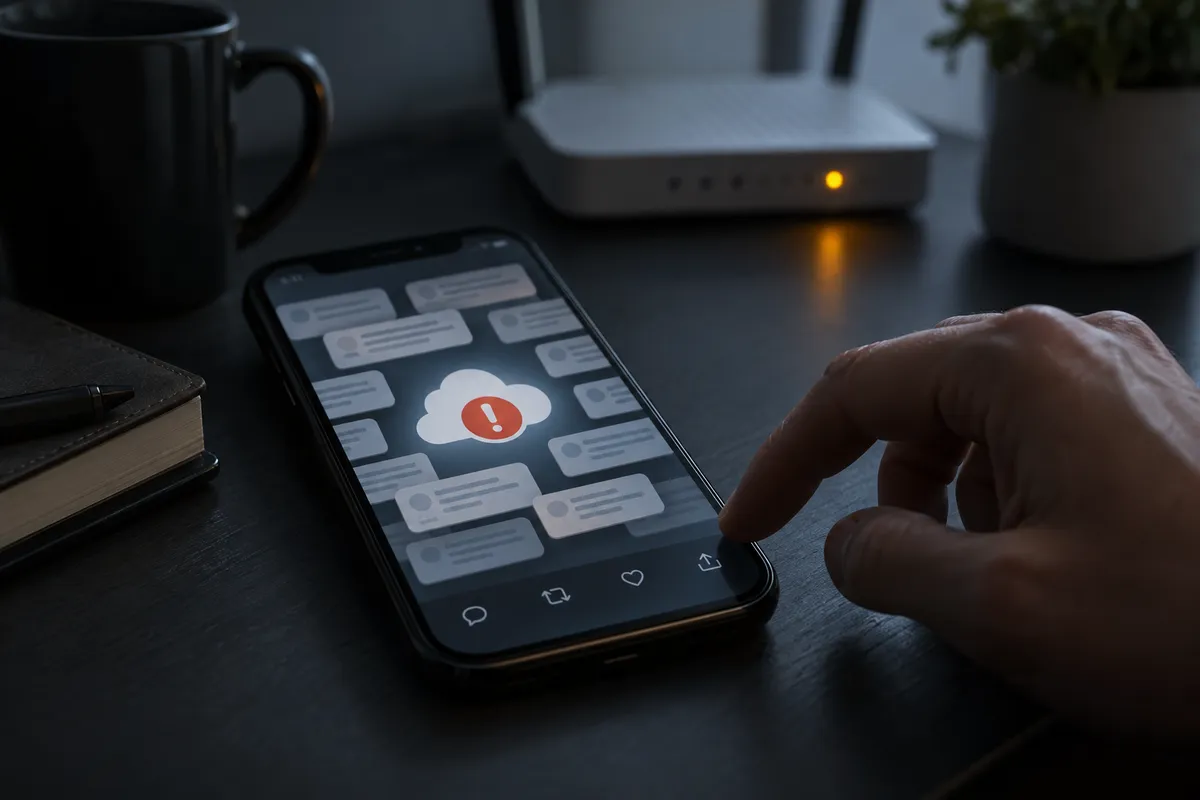
The apps went down, and the internet did what it always does: it started talking. According to an exclusive from Axios, bots amplified conspiracy theories and panic around recent tech outages, turning technical disruptions into viral misinformation events.
That's the news. The rest of this piece is my take on why the pattern works, and what you can do about it. The details of the Axios report beyond that summary aren't something I can vouch for here, so I'm sticking to what's been reported and labeling my own reading as such.
The Outage Is the Easy Part. The Vacuum Is the Opportunity.
Per Axios, the concern is that coordinated bot activity can exploit confusion in real time, before companies or journalists have clarified what happened. That timing is the whole trick.
An outage creates a gap. Your app is broken, nobody official has said why, and you're refreshing a feed for answers. It's hard not to see why that gap is attractive to anyone running automated accounts: a vacuum of information is the perfect place to plant a story, because there's nothing yet to contradict it.
The report version of the playbook, as I read it:
- Something breaks, and people get anxious.
- Official explanations lag behind.
- Accounts push dramatic theories into the silence.
- Real people, who are just trying to make sense of things, share them.
That last step is the one that matters. Bots don't need to convince everyone. They just need to make a rumor look popular enough that humans finish the job.
Why "Everything Is Connected" Feels So Good
Outage conspiracy content tends to lean on the same flavor of claim: this isn't a glitch, it's connected to something bigger. That's my characterization of the genre, not a finding from the report, but anyone who has watched a major service go dark and then scrolled the replies knows the vibe.
It works because it's narratively satisfying. "A misconfigured update" is a bad plot twist. A hidden hand is a better one. Fans of any long-running mystery-box TV show will recognize the instinct: we'd rather have a dramatic explanation than a boring one, even when boring is the likelier answer.
Trust Breaks Fast When Everything Runs on the Cloud
Axios frames this as part of a bigger shift: as society leans harder on cloud platforms, apps, and AI infrastructure, outages can quickly become trust crises. When so much of daily life routes through a handful of services, downtime stops feeling like an inconvenience and starts feeling like a threat. That emotional jump is what panic-peddlers rely on.
It also creates an awkward double bind. The platforms where people go to find out what's happening are often the same ones affected, or the same ones where the rumors are spreading. Checking the feed to verify the rumor can mean walking straight back into the rumor.
A Quick Pre-Share Checklist
This is practical advice drawn from the general logic of the report, not a list from Axios itself:
- Wait for an official statement. Companies and reputable journalists usually clarify, but not instantly. Patience is a surprisingly strong defense.
- Look at who's posting. Brand-new accounts, odd handles, or accounts repeating identical phrasing are worth a squint.
- Notice the emotion. If a post is engineered to make you panic or feel secretly in the know, slow down.
- Check for a source. A screenshot with no link is a vibe, not evidence.
- Ask what's the boring explanation. Often there is one, and it's usually less cinematic.
The Takeaway
The funniest and most unsettling part of this story is how little the bots have to invent. The outage supplies the drama, and our own appetite for a good "wait, what's really going on?" supplies the distribution. Next time the apps go dark, the most countercultural move available might be the least viral one: say nothing until someone actually knows something.