
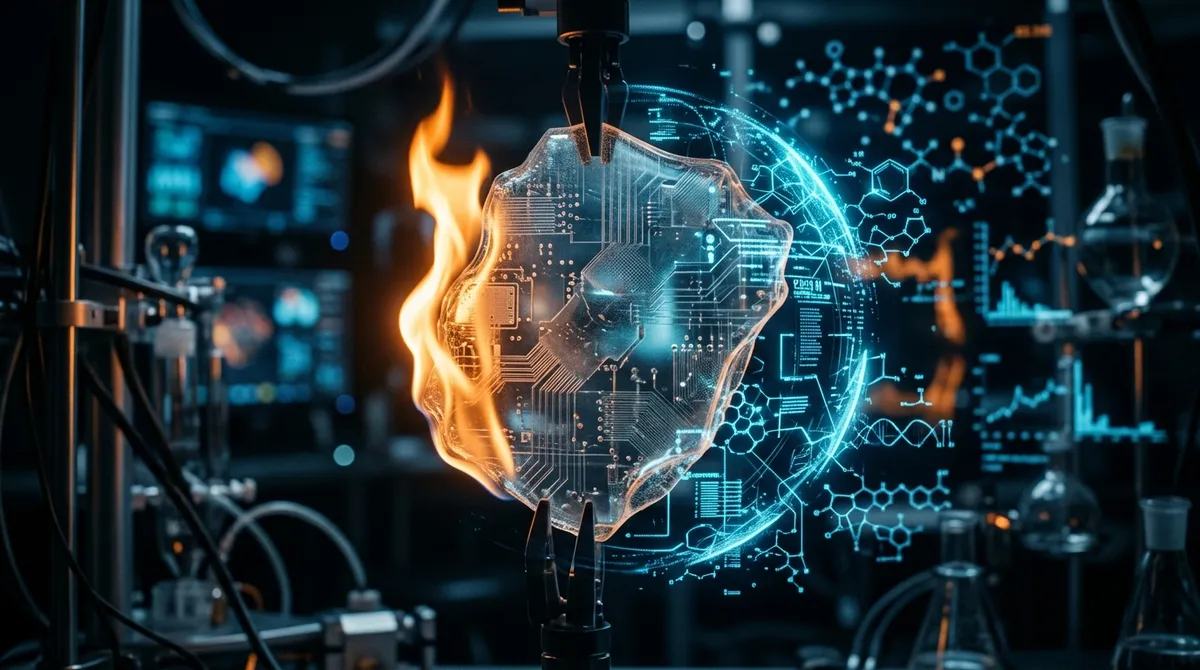
TL;DR: Researchers at IMDEA Materials Institute have developed an AI tool that predicts the flame resistance of new materials, enhancing safety in various sectors like electronics and construction. This advancement could lead to faster and more reliable selections of flame-retardant materials, replacing traditional trial-and-error methods.
Introduction to AI and Flame Resistance
In a world where technology meets safety standards, a group of brilliant minds at the IMDEA Materials Institute has made a groundbreaking leap. They've developed an AI tool capable of predicting the flame resistance of epoxy resins, which could significantly impact industries ranging from electronics to aerospace. Imagine a future where materials engineers can rely on precise predictions rather than months of tedious lab testing! Let's dive into what makes this AI tool a game changer.
The Mechanics Behind the AI Tool
How it Works
The AI model utilizes data from phosphorus-based flame-retardant composites. By analyzing vast datasets, it forecasts crucial fire safety indicators like UL-94 and LOI. These indicators help determine how well a material can withstand flames and smoke, allowing engineers to categorize materials rapidly based on their performance.
Understanding UL-94 and LOI
For those unfamiliar with these technical terms:
- UL-94: This safety standard classifies materials by their flammability characteristics (like HB, V-0, and V-1). The more resistant a material is to combustion, the higher its classification.
- LOI (Limiting Oxygen Index): This measures the minimum concentration of oxygen needed for a material to sustain combustion. Higher LOI values indicate better flame resistance.
These metrics are essential for ensuring the safety of products in high-risk applications.
Why Flame-Retardant Materials Are Challenging to Develop
Creating flame-retardant materials isn’t as simple as it sounds. The challenge lies in balancing flame resistance with other material properties such as strength, weight, and cost. Traditional approaches often involve a long, tedious process of trial-and-error testing, which can be costly and time-consuming.
But with the introduction of AI, this cumbersome process is beginning to find its place in the past. AI can efficiently analyze data, predict outcomes, and guide engineers toward the best options, saving both time and resources.
The Broader Impact: Safety in Electronics and EVs
Enhancing Safer Electronics
With the rise of devices packed with sensitive and potentially flammable components, ensuring their safety is paramount. This AI tool provides a vital shortcut in evaluating flame-resistant materials, helping manufacturers produce safer electronics that meet rising safety expectations.
EV Batteries: Need for Flammability Testing
In the realm of electric vehicles (EVs), flame resistance is a pressing concern. As batteries increase in capacity and power, the risks associated with overheating or combustion also escalate. By streamlining the selection of flame-resistant materials for battery encasements and vehicle interiors, the AI tool could significantly enhance EV safety.
The Shift from Lab Testing to AI-Powered Discoveries
The move toward AI in materials discovery marks a pivotal shift in how we think about product safety. Traditionally, engineers relied on extensive lab trials to evaluate material performance, leading to longer development cycles. With AI, researchers can now simulate and predict outcomes swiftly, making safer materials available faster than ever.
The Halogen-Free Movement: Safer Alternatives
One of the exciting aspects of this advancement is its alignment with the halogen-free movement in flame retardants. Halogenated flame retardants have come under scrutiny for their environmental and health implications. The AI tool mentioned above is helping engineers shift towards safer, halogen-free alternatives, driving innovation while protecting both people and the planet.
Conclusion
The advent of AI in materials science is ushering in a new era of safety and efficiency. The tool developed by IMDEA Materials Institute not only helps predict flame resistance but also aligns with the broader shift towards innovative, environmentally friendly solutions. As industries, especially electronics and EVs, face ever-increasing safety demands, this AI-powered approach could prove to be an invaluable asset in developing safer products for our future. So, next time you hear a crackle of excitement around fire safety innovations, remember the brilliant intersection of artificial intelligence and material science paving the way for a safer tomorrow!